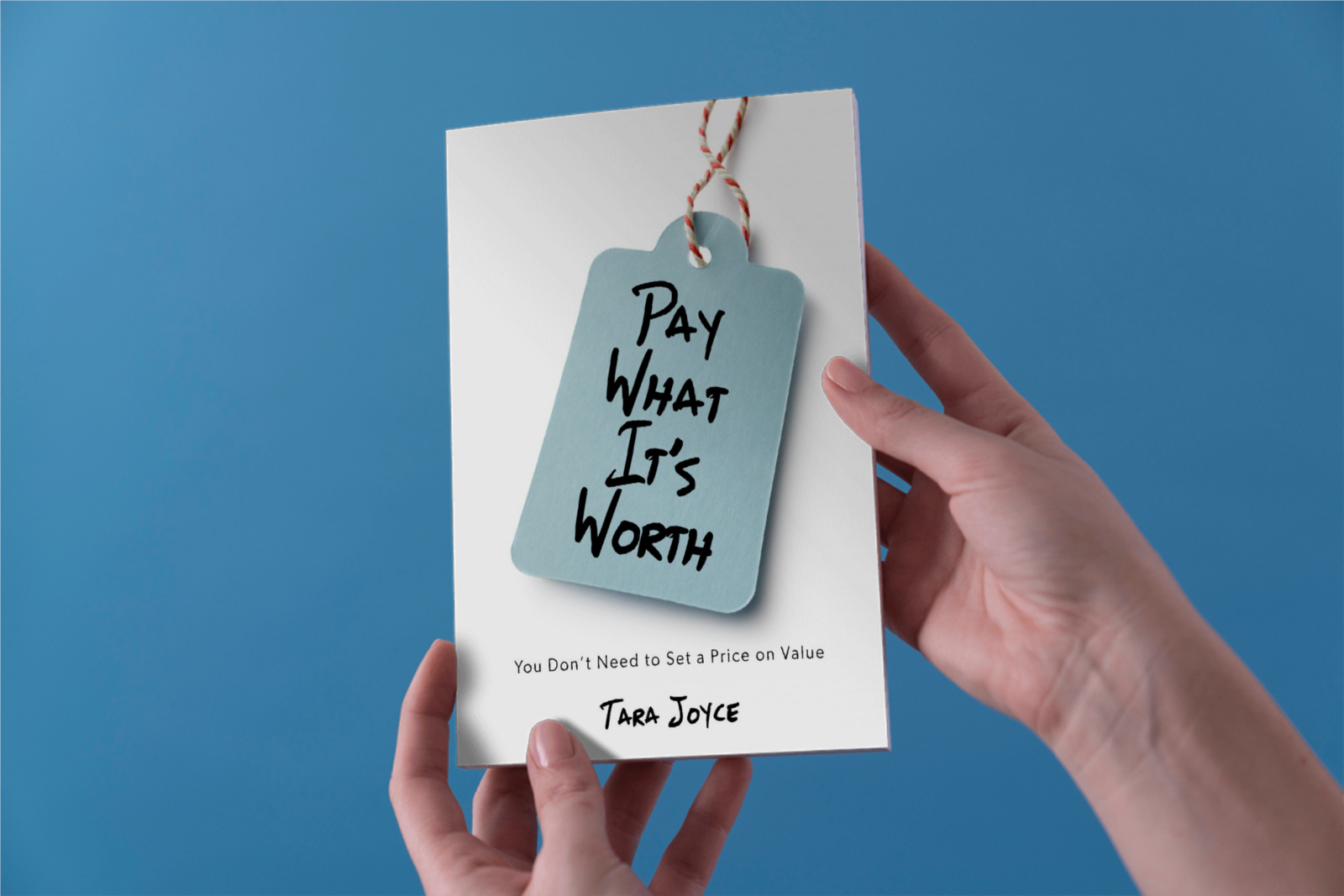
Worth

Here are some basic findings on using a Pay-What-It’s-Worth pricing system from the research paper Pay What You Like by J Fernandez and B Nahata:

1.

If a buyer feels that a product or service provides a positive value, they will never ‘free ride’ and not pay anything.

2.

Under certain conditions Pay-What-It’s-Worth can provide a larger profit than uniform pricing. A business that can best benefit from PWIW is:

{ 0 comments }

GenerosityI like to think about money as an idea in the form of ‘credit’. To get in the money game, I need to build up my ‘credit’.

I build ‘credit’ with others, but more importantly, I build ‘credit’ with myself. I receive ‘credit’ for how I hold myself up mentally.

When I hold myself as limited in any way, it restricts my availability to ‘credit’. I end up not sharing my gifts, and being undervalued in my relationships.

When I practice confidence in my Self, and not put limits on my wealth, I free the ‘credit’ to flow.

{ 0 comments }

Chat
Months ago, my dear friend Adam King and I sat down to talk. We’ve been having these skype talks for years now, sharing candidly with each other our expansion in life and business.

The last time we sat down to chat however, Adam had an agenda. He wanted to interview me and talk more in-depth about Pay-What-It’s-Worth (Value) pricing for a project of his. It’s a topic that we have explored together many times over the years and I was excited for the conversation.

Adam has recently published a book called The Year of Zen, through which he shares his learnings and expansion, online and off, over 2011. As a companion to the book, he created an interview series with 6 people he felt supported him in this journey. Our chat, Pricing From Personal Conviction, is part of this series.

{ 0 comments }

Why Pay?

When you are allowed to decide what to pay for an exchange, you will base your decision on four factors.

It is my theory that these four factors correlate with Integral Theory that there are Four Doors of Perception, known as AQAL, through which we all see the world.
Pricing AQAL

{ 0 comments }

hand out of wall

As a practitioner of Pay-What-It’s-Worth pricing, in my mind, there are big differences in asking a client to pay-what-they-can, and asking a client to pay-what-it’s-worth. They communicate very different things about your brand.

Care to explore them with me?

Exploring Pay-What-You-Can Pricing and What it Communicates

As a business owner, communicating that others are free to Pay-What-They-Can for your work positions you as willing to sell your work in charity. (You may want to consider at this point whether your business, or your clients, are, in fact, a charity.) In most cases neither party is a charity, so what you are truly communicating is that it’s okay for a client to pay whatever they *think* they can, and that you are open and lenient to allowing others to value your work at less than it’s worth, so long as the person deems they need it.

Now this is only my opinion, but I feel if you are responsible enough to identify a need and seek a solution for it, than you are also responsible enough to find the means for fulfilling that need – i.e., if you want it, you need to find a way to get it.

{ 4 comments }

Balance

Why is it a good thing to pay less than something is worth?

Why do we buy the story that happiness results from underpaying for something?

Often we can be so far removed from a product’s creation that it’s hard for us to understand the value of the thing we are buying. But, when we have first-hand evidence of the love, time and energy put into creating something, why would it feel good for us to undervalue it?

How do you feel when your time, energy or love is undervalued?

{ 0 comments }

Tara's Pay-What-It's-Worth Pricing mind map

If I Am Ever Going to Support Something…

Perhaps you’ve noticed, but I don’t really do endorsements here. I just can’t get behind a person, a place or a thing that I haven’t experienced directly, and derived value from. How could I assure you of the value of something or someone I’ve never actually worked with? I can’t. So I won’t. And I haven’t.

This decision is despite ‘information’ otherwise insinuating that one could grow rich and buy a yacht if only they had some affiliate advertising on their site.

I love money, I do, but my focus is on value. And I will not support things just because I can profit from them. I am committed to associating with excellence, in every facet of everything I do. I can not ignore the cost to my business of promoting the mediocre, and not really helping people. It is not worth compromising my most prized asset, my integrity.

This is Me Supporting Something… and Why

Two weeks ago, Mark Dykeman of Thoughtwrestling offered me a free review copy of his ebook on mind mapping.

{ 2 comments }